CATEGORIES
- Latest News
- Interviews
- Golf Travel
- Features
- Juniors
- Competition
- Events
- Health
- Equipment
- Fashion
- Archive
INFORMATION
CURRENT ISSUE
SUBSCRIPTIONS



CATEGORIES
INFORMATION
CURRENT ISSUE
SUBSCRIPTIONS

.jpg)




By Scarlett Thomas
There's a moment during my conversation with Elizabeth LeMay where she says something that perfectly captures the state of modern golf.
"She wants to look good. She doesn't only want to feel good. She wants to look good and feel good."
It's a simple statement, but it explains one of the biggest shifts happening in golf right now.
Women are the fastest-growing demographic entering the game. They're arriving with different expectations, different influences and a different relationship with sport. They want performance. They want innovation. They want sustainability. But they also want style — and they're no longer willing to sacrifice one for the other.
As Senior Director of Product Operations, adidas Golf, Elizabeth LeMay sits at the centre of that evolution.
.jpg)
The role is, in many ways, the culmination of a career built around innovation. Before joining adidas Golf, LeMay spent a decade running her
own innovation studio and previously worked on advanced innovation projects at Nike, developing products for Olympic and World Cup athletes.
"This is my first job in golf," she tells me. "But what landed me here is a passion for innovation. A passion for performance and sustainability. And more than anything else, a passion for doing what's right for the woman consumer."
That focus on women isn't just part of the job. It's personal.
LeMay is a golfer herself. By her own admission, a "not very good, yet addicted golfer" who understands the game from the inside out. She knows the frustration of clothing that rides up during a swing. She notices uncomfortable seams. She understands how five hours on a course can expose every weakness in a garment or a shoe.
It's this lived experience that informs her approach to product development, one increasingly shaped by the women now transforming the game.
"We're seeing that the biggest new attendance in golf has been women," she says.
For decades, golf fashion existed within fairly rigid boundaries. Traditional silhouettes, conservative styling and an unwritten dress code largely dictated what women wore on course. Today, those rules are loosening.
The rise of athletes such as Annabel Fuller, who recently attracted attention for wearing an adidas Beyond the Course Crop TWISTKNIT Polo on course, signals a broader shift in confidence and self-expression.
"She feels comfortable wearing it. It's breathable, and she wants to look good," says LeMay. "She doesn't want to just feel good. She wants to look good and feel good in order for her to play her game at the top of her ambition."
For LeMay, however, fashion can never come at the expense of performance.
For LeMay, performance in golf apparel means one thing above all else: zero distractions. It's a phrase she returns to often, and it speaks
to a philosophy that goes far deeper than aesthetics.
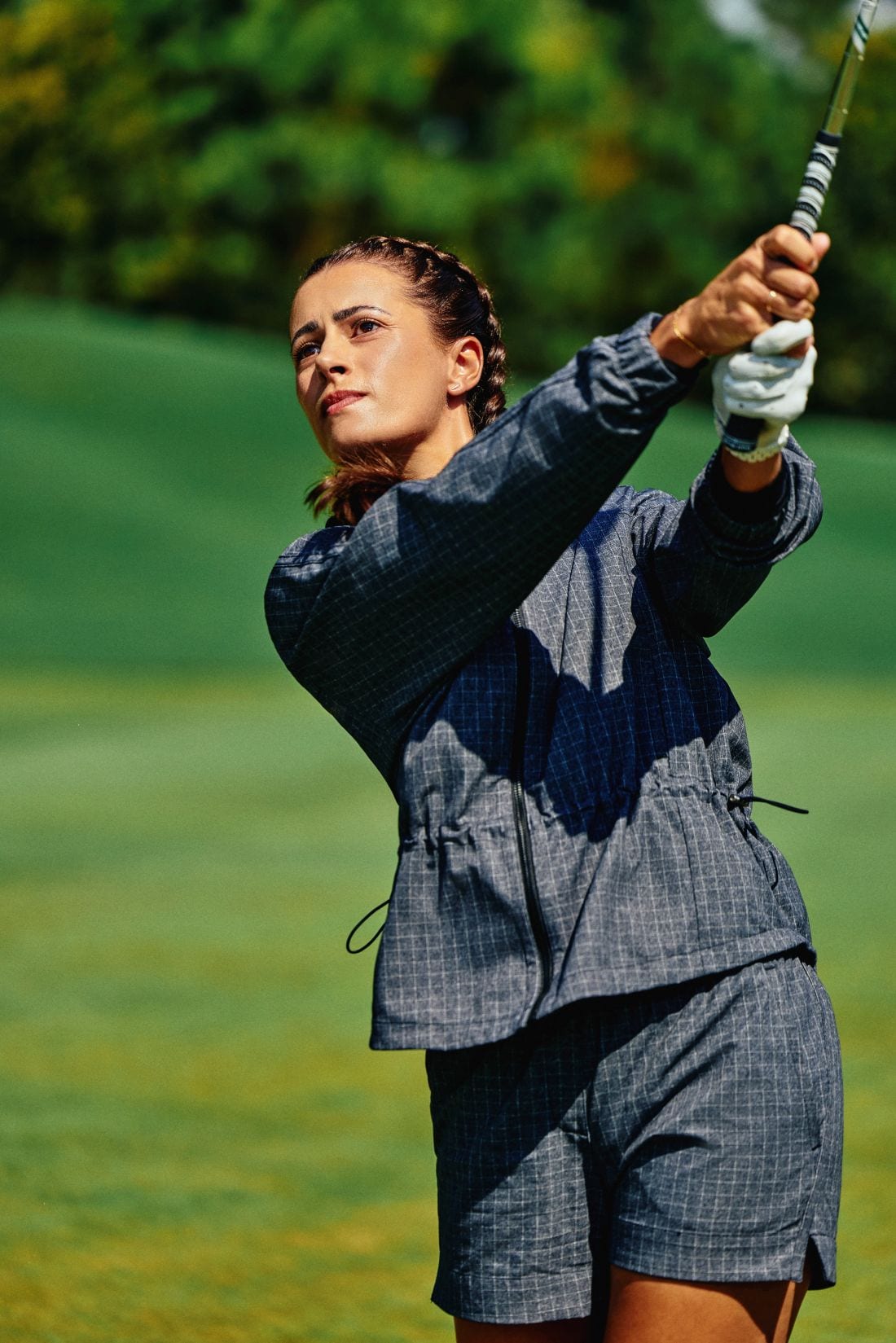
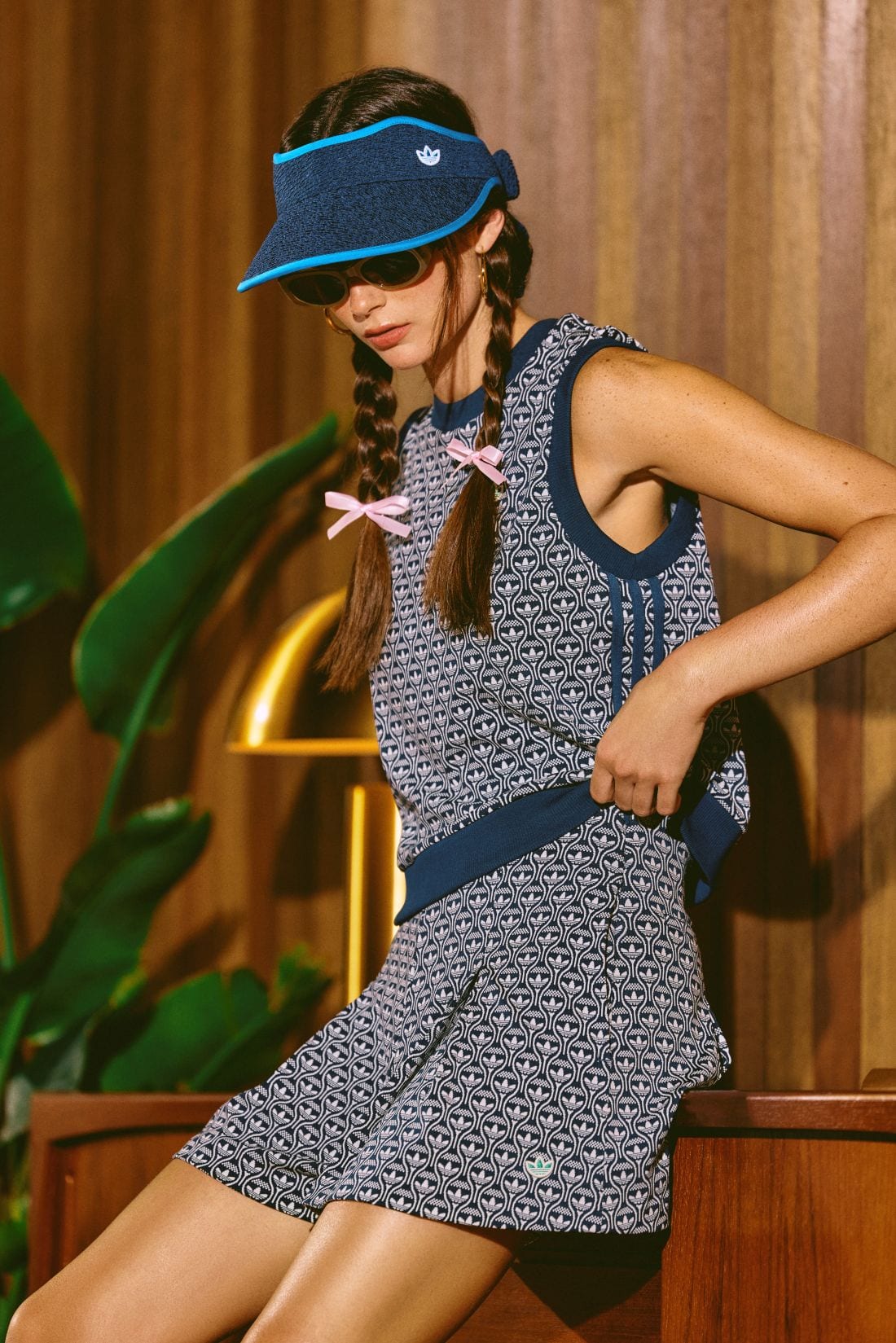
"When they put the clothes on or the shoes on, we don't want them to think about anything, whether it's a seam that's chafing or something that's hiking," she says. "So, they can go out and really operate at their craft at the highest level."
This extends to footwear, which LeMay considers equipment rather than an accessory. "They're on their feet for five-plus hours, and if they're playing in a tournament, they could be there four or five days in a row. So, our shoes not only have to look good, but they also have to perform for her."
Even the technical details are designed with the female body in mind. Sweat mapping — identifying where moisture-wicking technology is most needed — is built specifically around how women move and perspire.
"The sweat zones in a woman are very different from a man," she notes. "We pay attention to where the woman's sweat map is versus the man's. It could be the same innovation; it's just placed differently to adapt to her body and her swing."
And that conversation extends far beyond the green.
Golf's aesthetic has always occupied a unique space within sport, but LeMay believes the crossover between golf, fashion and lifestyle is becoming stronger than ever.
"We're seeing streetwear. We're seeing skate culture," she says. "It is not just an elite game anymore."
The influence is already visible across the industry. Relaxed silhouettes, wider-leg pants, fashion-driven collections and off-course versatility are becoming part of golf's visual identity.
The reason, LeMay believes, is simple.
"The younger generation is very connected to the trends happening around them."
They arrive at golf already immersed in fashion, social media and broader cultural movements. Naturally, they bring those influences with
them.

While fashion and performance may be the most visible aspects of modern golf apparel, sustainability is the thread running quietly through
every decision LeMay and her team make.
It's a topic she speaks about with the same conviction she brings to innovation and athlete performance.
"None of our products have standard polyester in them. It's either recycled polyester or a textile-to-textile polyester," she says. "We cannot compromise on sustainability."
For LeMay, sustainability isn't a marketing message added at the end of the process. It's embedded from the very beginning, influencing everything from material selection to product development and manufacturing.
She's also keen to challenge one of the biggest misconceptions consumers still have about sustainable fashion: that it inevitably costs more.
"It's more expensive to lose our environment," she says.
The belief that sustainability carries a significant price premium, she argues, is a lingering perception from the early days of organic cotton. Today, the conversation is less about adding cost and more about designing smarter from the outset.
One example is adidas's proprietary TWISTKNIT fabric technology, which achieves elasticity and recovery without the use of spandex.
"Spandex doesn't degrade. It takes hundreds of years to degrade," LeMay explains. "So that was a great story for us — not only showcasing sustainability but educating our consumer as to what it's about.”
Yet perhaps the most interesting part of our conversation isn't about clothing at all.
It's about representation.
Throughout the interview, LeMay returns to the idea that women should be visible across every part of the golf industry, not only as players, but as designers, marketers, innovators and leaders.
"I would like to see more women talk about what they do within the golf industry," she says.
At adidas Golf, women are represented throughout the business, from product development and marketing to sales and leadership. But LeMay wants young women entering the game to understand the breadth of opportunities available to them.
"You don't have to be a professional golfer to influence the game," she says.
It's a sentiment that feels particularly relevant as women's golf continues to evolve. The future of the sport won't be shaped solely by the players we see on television. It will also be shaped by the women behind the scenes designing products, leading teams, building brands and challenging long-held assumptions about who golf is for.
And if LeMay's work is any indication, that future is already well underway.


.jpg)