CATEGORIES
- Latest News
- Interviews
- Golf Travel
- Features
- Juniors
- Competition
- Events
- Health
- Equipment
- Fashion
- Archive
INFORMATION
CURRENT ISSUE

SUBSCRIPTIONS



CATEGORIES
INFORMATION
CURRENT ISSUE
SUBSCRIPTIONS

.jpg)



Words: Emma Carpenter
There is no shortage of young talent in women’s golf right now. But what makes this moment feel different is not just the results—it’s the range of personalities, perspectives, and paths rising alongside them.
Some are already winning on the biggest stages. Some are still sharpening their games in college while rewriting the record books for their
programs. Others are learning, in real time, how to survive and thrive as professionals. Together, they represent a generation that is not
only deep and global, but competitive, grounded, self-aware, and unafraid to define success on their own terms.
That future is already here.
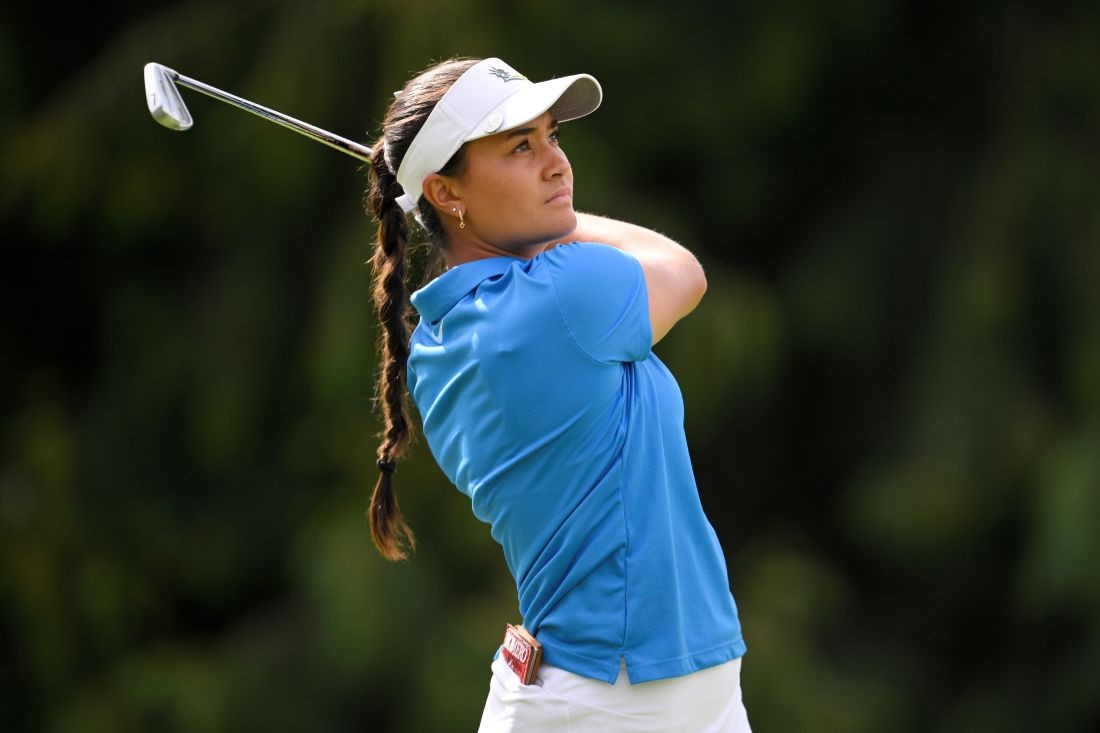
At University of Oregon, world No. 1 amateur Kiara Romero has recently become the winningest player in school history. If you ask her what defines her game, she doesn’t start with wins or rankings. She starts with joy.
“Obviously, I’m competitive,” Romero said. “But I take the route of just going out there and enjoying it.”
What’s most striking about Romero is how intentionally she protects her relationship with the game. In an era when young stars are constantly measured against “expectations”, she doesn’t even keep that word in her vocabulary.
“I try to stay away from expectations and goals,” she said. “It puts too much stress.”
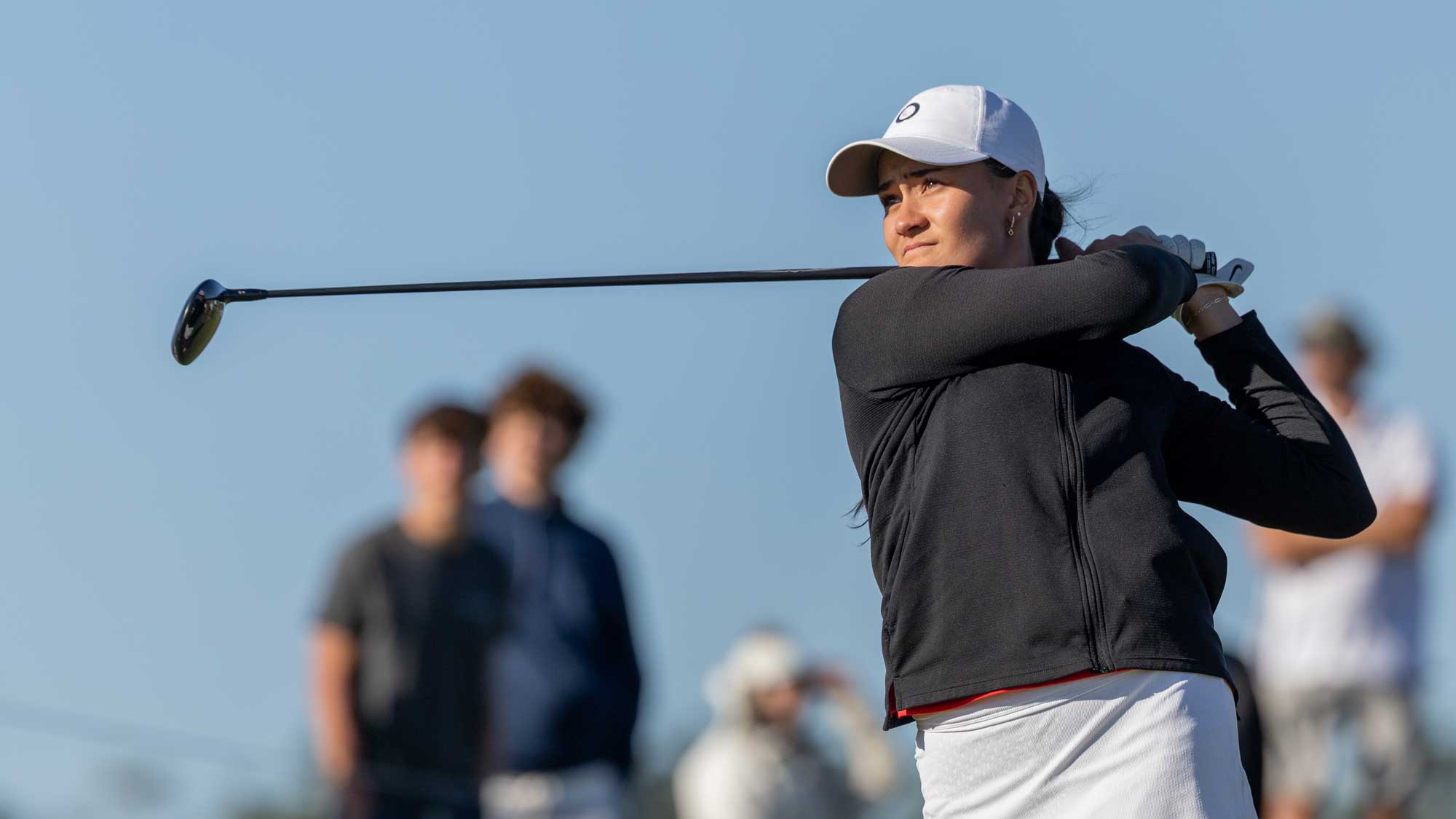
Photo: Kiara Romero courtesy of Getty Images
That perspective may sound surprising coming from one of the top players in college golf, but it helps explain the freedom with which she plays. Watching her play the final round of the 2025 Big Ten Championship, I’d personally never seen a player with more sense of calm.
Still, Romero’s story isn’t one about obsession at all costs. If anything, it’s about balance. Raised in a family that spent more time outside than online, she learned early that golf should be meaningful—but not all-consuming. She says that she learned a big piece of that during her first few months at Oregon.
“I realised I was looking at golf with the wrong perspective,” she said. Refocusing on her faith helped her take pressure off herself and reconnect with the game. That emotional maturity may just be one of the defining traits of this generation: the ability to chase greatness without letting it consume your entire identity.
No one may articulate that evolution more clearly than Erica Shepherd.
Shepherd has been on the national and global radar for years. She won the U.S. Girls’ Junior, starred at Duke University, was a four-time participant in the Augusta National Women’s Amateur, and built the kind of résumé that naturally creates expectations from herself and others. But the transition to professional golf, she admits, was more difficult than she imagined.
“The first year and a half of pro golf was bad for me,” she said. “I missed the first seven cuts on the Epson Tour.”
.jpg)
Photo: Hannah Darling
For a player who had long been used to achievement, that stretch forced a reckoning. Shepherd says she once tied her self-worth too tightly to her goals—winning, rankings, milestones, even the dream of becoming No. 1 in the world. When those things didn’t happen immediately, it affected her personally.
“Having those expectations harmed my beginning to pro golf,” she said. “Once I let go of that, and trusted that I would be okay no matter what, I was able to enjoy the game more.”
That shift has not made her any less ambitious. It has made her healthier, more resilient, and more dangerous.
Now, Shepherd describes one of her greatest strengths not as a swing trait, but as her ability to recover—emotionally and competitively. She said that this new era of golf has taught her lessons about how to play well even when you don’t have your best stuff—which is what makes a great golfer.
“I know I’ll find a way to make par even when it seems impossible,” she said. “I get in this headspace where I feel like I can bulldoze through the golf course.”
.jpg)
Photo: Hannah Darling
It is a striking contrast to the intensity she once carried, and it reflects something broader happening across women’s golf: a new wave of players who are learning that longevity requires a special kind of mindset.
And these women are arriving from everywhere.
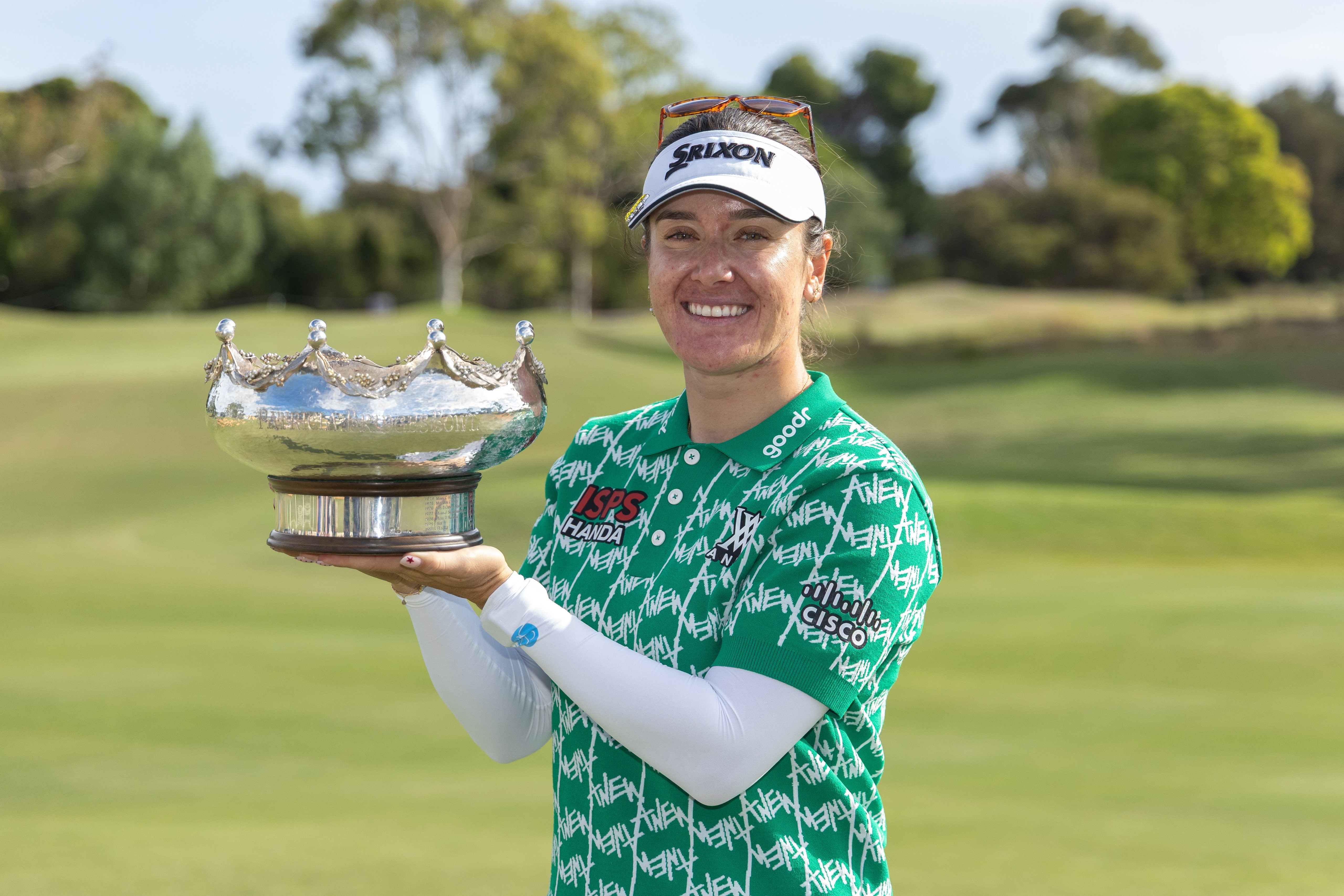
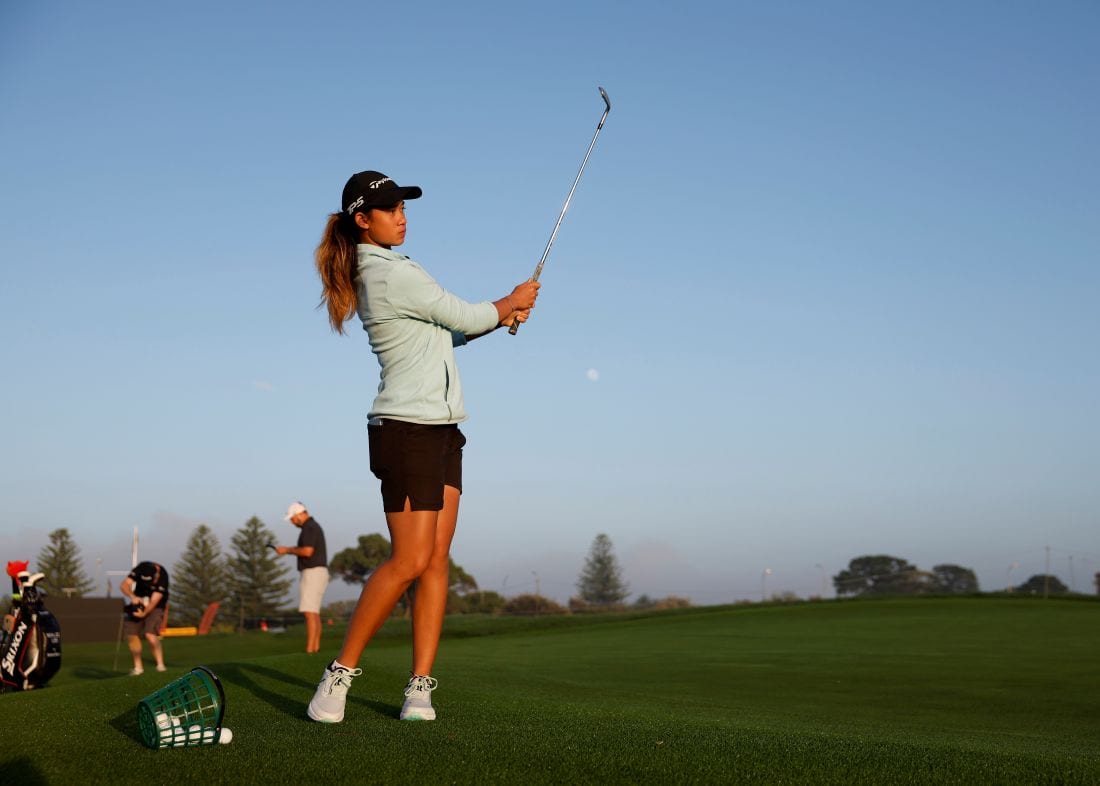
Australia’s Kelsey Bennett has emerged as one of the most intriguing international risers, building momentum with a breakout run on the Ladies European Tour after winning the 2026 Australian Women’s Classic. Bennett’s climb is part of a larger truth about the women’s game right now: the pipeline is no longer concentrated in a few traditional power centres. It is global, and it is accelerating.
From Japan, Miyu Yamashita has already gone from rising talent to established force. After capturing the 2025 AIG Women’s Open and earning LPGA Rookie of the Year honours, Yamashita has quickly become one of the clearest examples of how seamlessly elite international players are now transitioning onto the biggest stage.
Then there is also Scotland’s Hannah Darling, long regarded as one of the most polished amateur talents in the world, and Thailand’s Eila Galitsky, whose poise and pedigree have made her one of the most compelling young players to watch in college golf and beyond.
Darling was the youngest ever winner of the Scottish Girls’ Amateur Championship at age 13, represented Great Britain & Ireland at the Curtis Cup (2021, 2022, 2024), represented Europe at the Junior Solheim Cup in 2019, and is teeing it up this season as a 2026 full-member of the Ladies’ European Tour.
Galitsky, still just in the very early stages of her career, has already shown she can handle major championship environments and global team competition. She won the 2023 Women's Amateur Asia-Pacific Championship, which earned her invitations to several major championships, including the 2023 Chevron Championship, where she made the cut and finished as the low amateur.
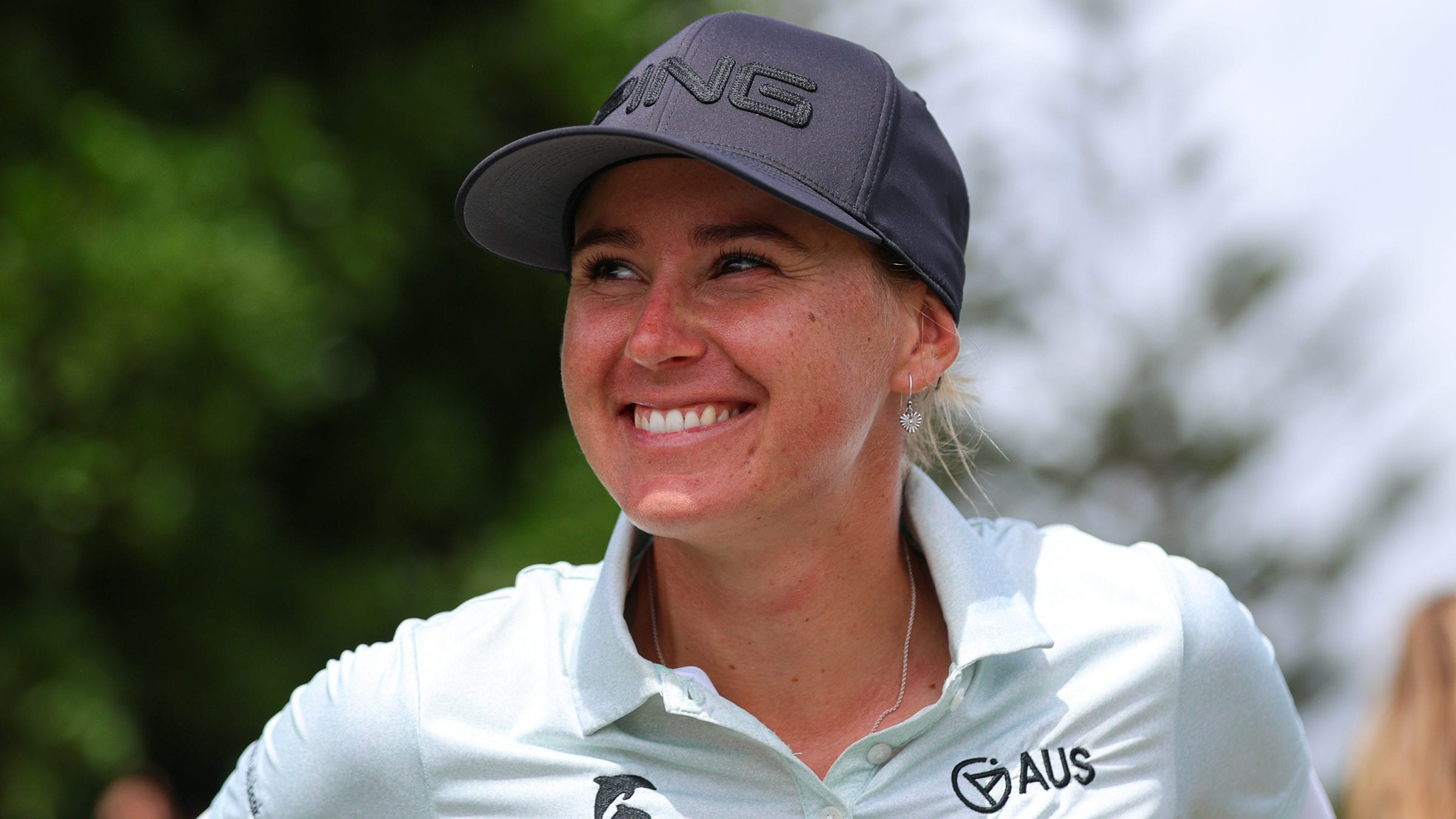
Photos: (Left) Eila Galitsky, (Right) Kelsey Bennett
What connects all of these young women is not that they play the game of golf the same way. It is that they are helping expand what excellence in women’s golf can look like.
Romero, for one, already seems to understand the balance of passion and a grounded mindset. And if there is a lesson in the way she approaches the game—and perhaps in the way this next wave is approaching it too—it may be this:
“I would tell them to choose to play the game for themselves and not because anyone told them to,” Romero said. “Enjoy every part of it. When you’re going through the bad times, the good times are right around the corner. You have to really accept both and take them as they come.”
For years, golf has often celebrated stoicism, perfectionism, and control. This generation seems more interested in freedom—in expressing personality without sacrificing the seriousness and passion they feel towards it.
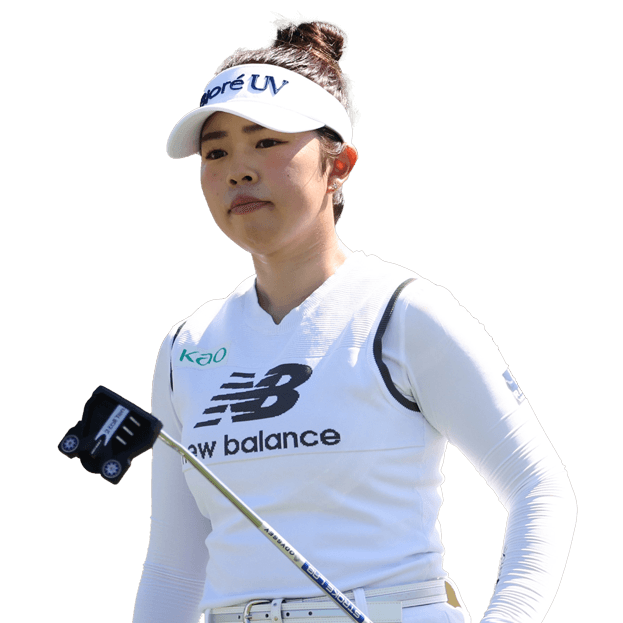
Photo: Miyu Yamashita courtesy of the LPGA
That doesn’t mean they care less. If anything, they may care more deeply than ever. But many of them are learning younger what some players spend entire careers trying to understand: that the healthiest competitors are often the most dangerous ones.
And yet, these players seem ready for it and hungry for more.
“It’s so exciting,” Romero says. “Being a part of a time of growth and becoming one of the players that I would’ve looked up to is super exciting.”
That may be the simplest and truest way to describe what is happening in women’s golf right now. There are stars, storylines, future major champions, and world No. 1s in this group.
But more than anything, there is momentum. And the next wave is no longer coming.
It’s already here.